

- This event has passed.

Day With(out) Art 2025:
Meet Us Where We’re At…
The Utah Museum of Fine Arts is proud to partner with Visual AIDS for Day With(out) Art 2025 by presenting Meet Us Where We’re At, a program of six videos that forefront the experiences of drug users and harm reduction practices as they intersect with the ongoing HIV crisis.
This free event at the UMFA will include film screenings, community conversation, postcard writing, and tasty snacks! All are welcome, and we hope you’ll join us for a Day With(out) Art.
Content Advisory
These unrated videos contain sexual content, nudity, and drug use; they are intended for adult audiences. In an effort to preserve the integrity of the artists’ ideas, they will be presented as-is. If you choose not to attend the screening, please enjoy the galleries and the activities in the Great Hall.
Agenda
5-6 pm | Visit the Global Contemporary Gallery to engage with Félix González-Torres’s Untitled (L.A.) adjacent to a work of art covered to honor World AIDS Day. Light refreshments, postcard-writing, community tabling in the Great Hall.
6-6:45 pm | Community panel in the Dumke Auditorium.
7-9 pm | Film screenings, activities continue in the Great Hall (postcard writing and refreshments) and galleries.

Meet Us Where We’re At… will feature newly commissioned videos by Kenneth Idongesit Usoro (Nigeria), Hoàng Thái Anh (Vietnam), Gustavo Vinagre & Vinicius Couto (Brazil/Portugal), Camilo Tapia Flores (Chile/Brazil), Camila Flores-Fernández (Peru/Germany), and José Luis Cortés (Puerto Rico).
Commissioned videos by artists in Puerto Rico, Brazil, Nigeria, Germany, and Vietnam journey across a range of spaces revealing the complexity of drug use. Several videos document the visible world of drugs—a harm reduction program in a Berlin park, a night out during Rio’s Carnival—while others reveal private, often hidden spaces where safety is found: bedrooms, underground clinics, and moments of connection between lovers.
Meet Us Where We’re At speaks not only to the variety of physical locations where contemporary harm reduction is practiced, but also to a broader shift: centering drug users as authors of their own experiences. Rooted in the philosophy of meeting people at their personal reality without judgment, the program affirms the full context of drug use—its pleasures, its risks, and its role in how people survive, care, and connect.
Harm reduction has long been central to the AIDS movement through practices like needle exchange and safe injection sites, and people who use drugs have been affected by HIV since the earliest days of the epidemic. This program brings their perspectives to the forefront, amplifying the voices of drug users as storytellers, cultural producers, and essential participants in the global response to HIV.
Visual AIDS is a New York-based non-profit that utilizes art to fight AIDS by provoking dialogue, supporting HIV+ artists, and preserving a legacy, because AIDS is not over.
Community Panelists

Dr. Virginia Solomon
Dr. Virginia Solomon: B.A. Stanford University, 2004, Studio Art and Feminist Studies; M.A. 2007, Ph.D. 2013, Art History and Gender Studies, University of Southern California
Dr. Solomon’s research interests include contemporary art, curation, gender studies, queer theory, visual culture, subcultures, and alternative forms of politics. Solomon’s research has been supported by a Canadian Art Research Fellowship at the National Gallery of Canada and a Helena Rubenstein Critical Studies Fellowship at the Whitney Museum of American Art Independent Study Program, among others. Their curatorial work includes the exhibition Tainted Love (2009) at the La Mama La Galleria in NYC and Shary Boyle and Emily Duke: The Illuminations Project (2011), realized while serving as the Whitney-Lauder Curatorial Fellow at the Institute of Contemporary Art in Philadelphia. Before joining the faculty at the University of Utah, Solomon was an Assistant Professor of Contemporary Art History at the University of Memphis and a Postdoctoral Fellow in Visual Studies in the School of Art and Design History and Theory at Parsons The New School for Design. Their current book project considers how the work of Canadian artist group General Idea presents a theory of subcultural politics.

Sequan Kolibas
Sequan Kolibas is the founding partner and Executive Director of Hope on T.T.a.P.P. (Testing, Treatment and Peer-led Prevention), a non-profit rapid point-of-care outreach program, specializing in HIV and hepatitis C care. Her organization is the only one of its kind in Utah, providing free services that include confidential testing, linkage to judgment-free care, transportation to medical appointments, medication delivery, medical case management and easy access to prevention options, among many other services aimed at improving the quality of life for their clients. Sequan grew up in addiction, experienced years of incarceration, was involved in sex work and lived through short-term homelessness. Diagnosed with HIV in 2013, she suffered in silence for years before taking action in 2020 to help her community. A certified Harm Reductionist and HIV Peer Navigator, Sequan serves on the Utah HIV Planning Group, Getting to Zero Strategic Planning Committee and the Utah Viral Hepatitis Elimination Group. Through her anti-stigma training for healthcare providers, she strives to improve healthcare for vulnerable populations nationwide. Her mission is to prevent not only the spread of HIV and hepatitis C, but also the misinformation that is still widely prevalent surrounding these infections. She aims to educate and empower individuals, amplify unheard voices and end the stigma that her community so unjustly faces.

Kimberley Farley
Kimberley Farley, MSW, MA, is a dedicated public health professional who currently serves as the HIV Prevention Manager for the Utah Department of Health and Human Services (DHHS). Her work in Utah is central to the HIV/STD Elimination, Analysis, Response, and Treatment (HEART Program). This integrated program combines HIV Prevention, Surveillance, Ryan White Part B services, and STD Prevention/Surveillance to maximize public health impact across the state.
She began her career over two decades ago providing essential HIV testing at an LGBTQ youth drop-in center in Florida. She then went on to earn both a Master of Social Work (MSW) and a Master of Arts (MA) in International Studies (Global Health) from the University of Denver. After completing her degrees, she assisted with data collection and HIV testing for the National HIV Behavioral Surveillance program. She then took her skills to Atlanta and served as a Ryan White Medical Case Manager at AID Atlanta before relocating to Salt Lake City, where she continued providing critical Ryan White Medical Case Management services prior to joining the DHHS team.
Dr. Susana Williams Keeshin
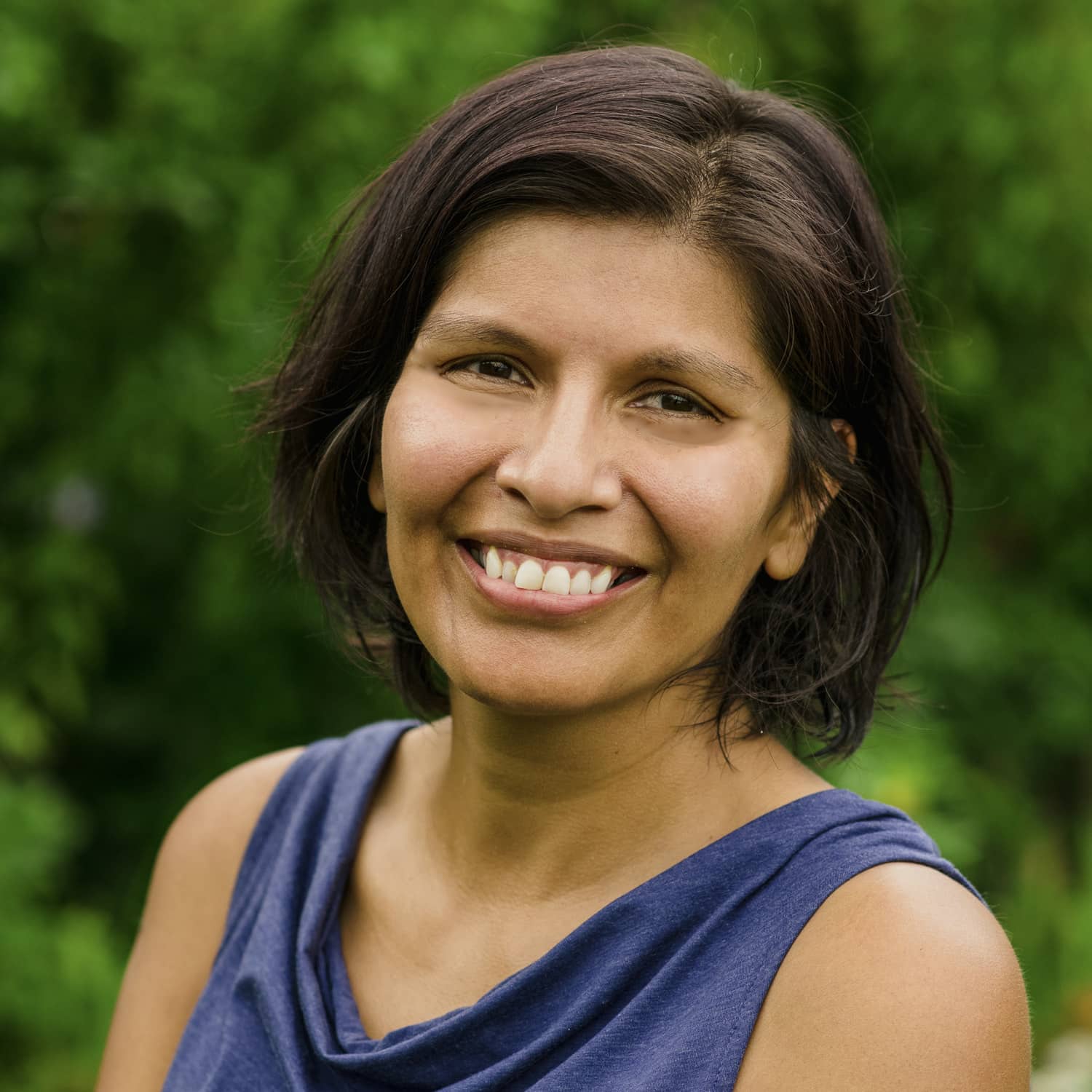
Susana Williams Keeshin, MD, originally from La Paz, Bolivia, is an Associate Professor of Pediatrics in the Division of Infectious Disease at the University of Utah. She cares for pediatric patients at Primary Children’s Hospital and adult patients at Intermountain Medical Center in Murray. Dr. Keeshin earned her B.S. in Biology, B.A. in Sociology, and B.A. in Spanish from the University of Utah, as well as her M.D. from Meharry Medical College in Nashville, Tennessee. She completed her residency in Internal Medicine and Pediatrics at the University of Utah and her Infectious Disease Fellowship at the University of Cincinnati.
Dr. Keeshin collaborates with local and national LGBTQ+ organizations to promote health equity and reduce disparities. She is a member of the U.S. Department of Health and Human Services Perinatal Guidelines Committee, where she helps create nationwide HIV treatment and prevention protocols. As a respected health expert, researcher, and educator, she seeks to improve access to healthcare. Her scholarly work concentrates on HIV care, prevention, and enhancing outcomes for people of all ages with or at high risk of infectious diseases, especially HIV and HCV.
Video Synopses & Artist Biographies

Kenneth Idongesit Usoro, Voices of Resilience
Voices of Resilience follows the lives of queer individuals and drug users living with HIV in Nigeria. Through personal interviews and experimental visual storytelling, the film shows the protagonists’ worlds as they seek out underground harm reduction services.
Kenneth Idongesit Usoro (he/him) is a young Nigerian filmmaker and Executive Director of The Colored Space, a studio championing LGBTQ+ voices. Specializing in documentary and experimental storytelling, Kenneth tackles stigmas faced by marginalized communities, particularly queer people. His work emphasizes resilience and harm reduction, using film to inspire dialogue, foster understanding, and drive social change. Passionate about authentic narratives, Kenneth leverages his creative platform to empower communities and break down barriers through impactful storytelling.

Hoàng Thái Anh, The Sister’s Journey
Through a documentary style, The Sister’s Journey explores the daily life of a transgender woman in Vietnam using drugs. The film delves into her fear of stigma, struggles she faces, and the vital role of harm reduction services and healthcare available to her.
Hoàng Thái Anh (he/him) is a social worker dedicated to advancing the well-being of marginalized communities in Vietnam. With a passion for storytelling through video, he collaborates with advisory boards, community members, and stakeholders to create impactful short films that highlight the challenges these communities face, focusing on healthcare access and harm reduction. His work ensures that their experiences are portrayed and authentically represented.

Gustavo Vinagre and Vinicius Couto, chempassion
In the magical realist film, chempassion, a gay man reminisces about his orgy days and chem sex, contemplating what the future holds for himself and his close relationships.
Gustavo Vinagre (he/him) is a filmmaker and documentarian who has written and directed over 14 short and six feature-length films. Having studied literature at the University of São Paulo in Brazil and film at the EICTV school in Cuba, Vinagre holds a prolific career spanning over 10 years, with films that are known for their vibrant queerness and their intimate approach to image and sound. The award-winning Three Tidy Tigers Tied a Tie Tighter was his first fiction feature film and premiered at Berlinale Forum in 2022. His films have won more than 100 awards and have been featured twice in Cahiers du Cinéma.
Vinicius Couto (he/him) is a Brazilian artist and creative director based in Portugal, whose work explores the intersections of gender, race, sexuality, and LGBTQIA+ identity from a post-structuralist perspective. He has participated in residencies and exhibitions at institutions such as the Cairo Biennale 2018/2023, MAM-SP, and CMA Hélio Oiticica. In 2021, he held his first solo exhibition at EtopiaZgz (Spain) and was invited to perform at André Breton’s house in France. In 2022, he presented the installation “Pro_cu.rar.se” in Lisbon. He is currently the curator of the Palácio do Grilo in Lisbon, continuing to investigate contemporary sociocultural and political dynamics.

Camilo Tapia Flores, Realce (Highlight), 2025. Commissioned by Visual AIDS for Meet Us Where We’re At.
Camilo Tapia Flores, Realce (Highlight)
Realce is a documentary short following two HIV-positive friends, DJ Deseo and porn actor Fernando Brutto, during one of their performances at Rio de Janeiro’s Carnival. The duo move through the streets of Rio and Carnival “blocos,” sharing their reflections on friendship, undetectability, their relationship with sex, and drug use within their own community.
Camilo Tapia Flores (he/him) is a Latin American queer artist, journalist, and DJ whose work reflects his experience as HIV-positive, focusing on bringing HIV discussions into the spaces he inhabits. From 2019 to 2022, he actively collaborated with the JEVVIH association to promote HIV awareness on Chile’s public agenda. Now based in Rio de Janeiro, he continues his activism within the underground electronic scene, raising awareness through his art and presence in the community.

Camila Flores-Fernández, Ghost in the Park
Ghost in the Park traces the narratives of the community of Görlitzer Park, an area in Berlin known for public drug use and trade. Highlighting “drug consumption buses” that promote safer use and aim to reduce HIV transmission among drug users, the space of the bus is taken as an axis through which the experiences and feelings of the community around the park are amplified.
Camila Flores-Fernández (she/her) is a Peruvian researcher and artist currently based in Berlin. She holds an MSc in Cultural Anthropology (KU Leuven) and is a current MA student in the EMJMD Media Arts Cultures and Erasmus Mundus scholar. Her work centers around marginalized communities and employs ethnographic and collaborative methodologies.

José Luis Cortés, ¿Por qué tanto dolor? (Why so much pain?)
Instead of asking, “Why so much meth in the gay community?,” Cortés’s experimental film provokes the deeper question, “Why so much pain?” The film delves into the emotional and social wounds that fuel addiction and risk-taking behaviors.
José Luis Cortés (he/him) is an artist who works across painting, performance, and video, best known for artwork inspired by his time in New York City in the early 1990s. A native Philadelphian, Cortés’ very personal work reflects the underbelly of gay life, documenting a life on the fringes of society: of sex workers, addiction, and of a rapidly-changing landscape. Through his work he validates his world and voices his identity as both a gay man and as a Puerto Rican. Cortés’ work has been exhibited in galleries and museums across the country as well as in Europe. His work has been reviewed in The New York Times, Art in America, Out Magazine, and many other publications.


Header Image: José Luis Cortés, ¿Por qué tanto dolor? (Why So Much Pain?), 2025. Commissioned by Visual AIDS for Meet Us Where We’re At.